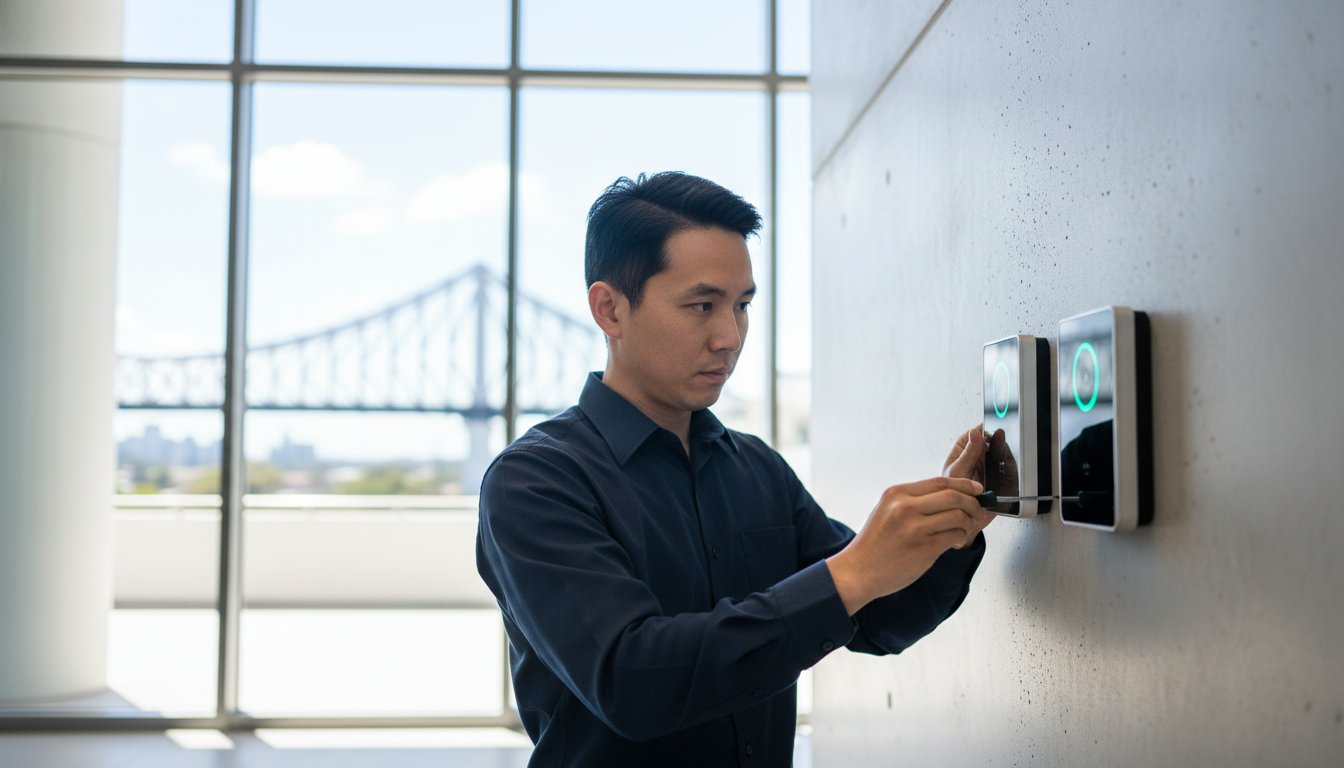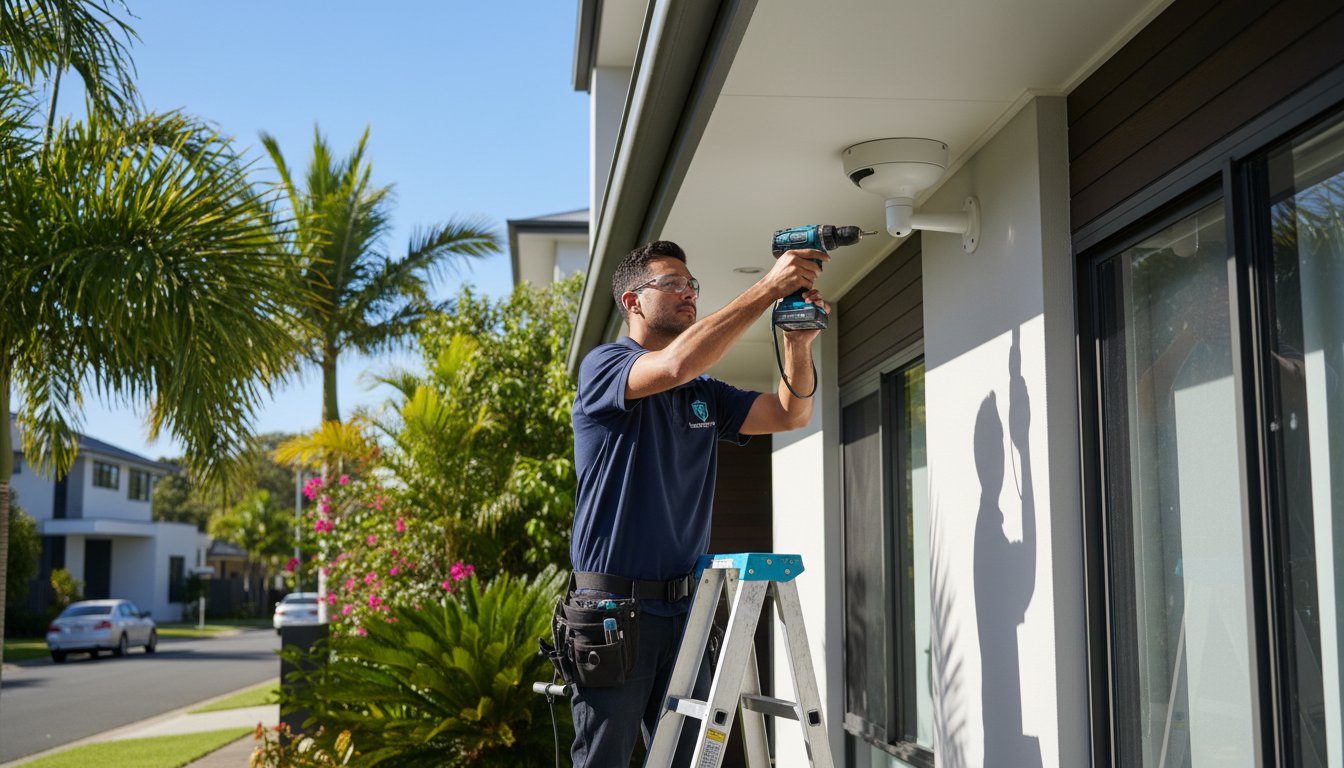
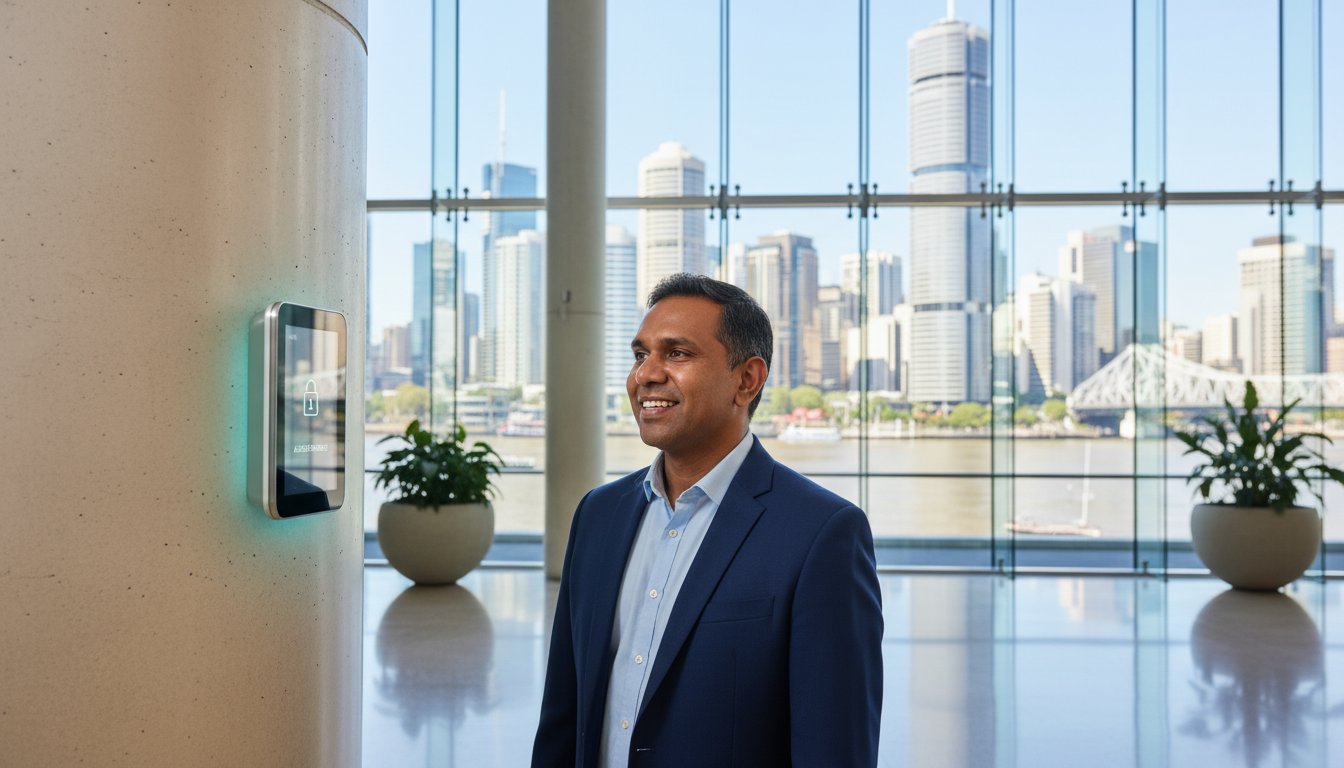
A 2024 industry audit found that 62% of security breaches in Australian commercial facilities are linked directly to stolen or shared physical credentials. You likely know the headache of managing a mobile workforce where lost swipe cards and shared PINs compromise your site integrity every day. It’s time to stop treating security as an afterthought. Investing in biometric access control systems Brisbane wide ensures your staff become their own un-shareable entry keys, eliminating the risk of unauthorized access.
This 2026 commercial guide helps you master the technical and regulatory requirements to protect your Brisbane business assets with absolute confidence. We’ll show you how to select hardware that withstands 90% humidity levels. We also explain how to sync your entry points with existing CCTV for streamlined staff mobilisation and a foolproof safety audit trail.
Key Takeaways
- Eliminate the operational costs of “buddy punching” and lost credentials by upgrading to biometric access control systems Brisbane for superior site integrity.
- Master the technical differences between fingerprint, facial, and iris recognition to ensure your chosen modality aligns with your facility’s specific risk profile.
- Ensure your business remains compliant with the Australian Privacy Act 1988 by understanding the legal obligations surrounding sensitive data and Privacy Impact Assessments.
- Identify the critical integration points needed to sync advanced biometric hardware with your existing CCTV and intruder alarms for a unified security response.
- Leverage local “boots on the ground” expertise to design a customised solution that prioritises both operational flow and the safety of your workforce.
Beyond Keys and Cards: Why Brisbane Businesses are Switching to Biometrics
Brisbane’s industrial landscape is evolving rapidly. Companies are ditching physical keys and plastic swipe cards for more secure, un-shareable identity markers. Using biometric access control systems Brisbane wide allows firms to treat their workforce as the high-value assets they truly are. Traditional security methods rely on what a person has or what they know. Biometrics rely on who the person actually is. This shift isn’t just about adopting high-tech gadgets; it’s about operational integrity and protecting the bottom line.
From the busy logistics hubs in Eagle Farm to high-rise corporate offices in the CBD, the transition to biometrics is driven by a need for absolute certainty. You can’t loan a fingerprint to a mate, and you can’t lose your face in the car park. This technology bridges the gap between simple security and comprehensive asset protection for both people and property.
The Risk of Traditional Access Methods
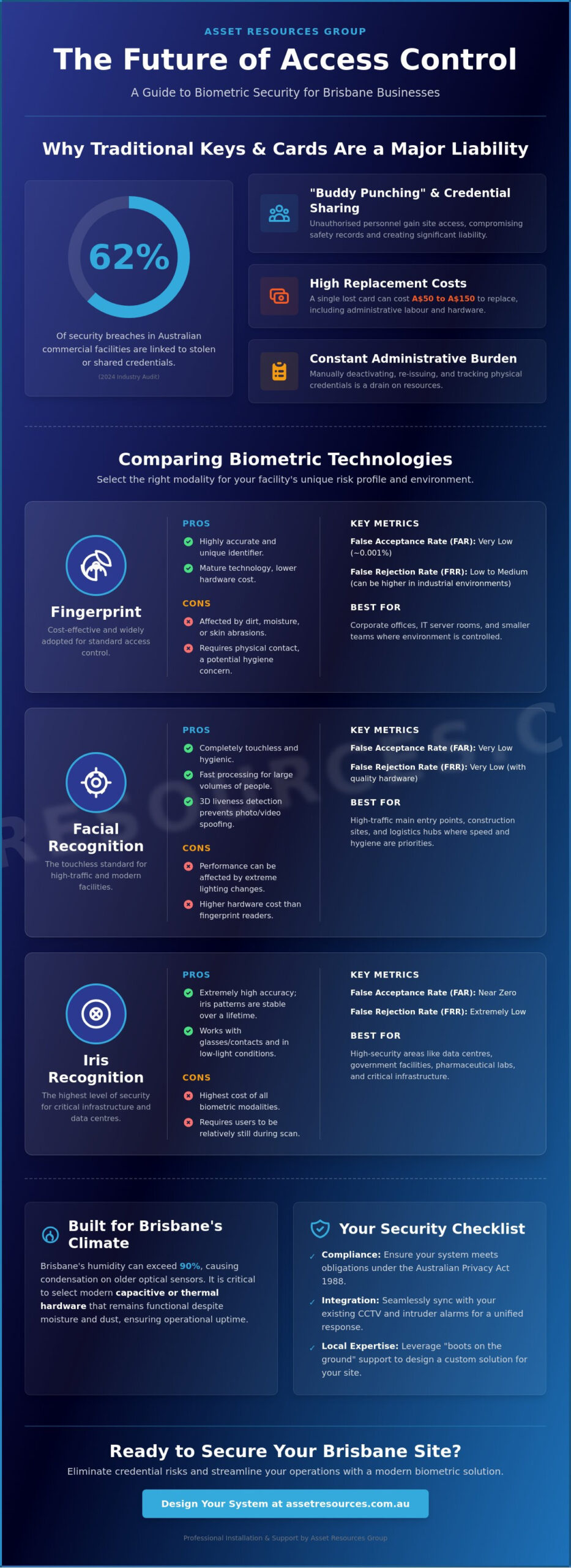
Physical keys and plastic swipe cards carry a heavy, hidden price tag. When a card is lost or stolen, site security is compromised until that specific credential is manually deactivated. In high-turnover sectors like construction or temporary labour hire, the administrative burden is constant. Research into commercial security suggests the cost of re-issuing a single lost card can range from A$50 to A$150 when you factor in hardware costs and administrative labour hours.
Beyond the simple replacement cost, traditional access control systems fail to prevent “buddy punching” or credential sharing. If a worker swipes in for a late colleague, your site data is compromised. For high-stakes industries where site safety is non-negotiable, this identity gap is a liability. An “un-shareable” identity is the only way to guarantee that only inducted, authorised personnel are on-site at any given time.
The Biometric Advantage for SEQ Operations
Efficiency drives profit in South East Queensland. Biometric systems streamline the mobilisation process by removing the need for physical handovers of keys or fobs. Staff get on-site faster. Fingerprint, iris, or facial recognition ensures that the person on the manifest is the exact person entering the gate. This precision is vital for workplace health and safety (WHS) reporting and compliance.
At Asset Resources Group, we view these systems as essential tools for protecting your most valuable assets: your people. By implementing biometric access control systems Brisbane managers can generate real-time, accurate audit trails that stand up to scrutiny. This data is crucial during safety audits or incident investigations. Whether you’re managing a massive warehouse near the Port of Brisbane or a multi-storey project in the city, the move to biometrics ensures that site safety is guaranteed through technology, not just assumed through paperwork.
Comparing Biometric Technologies: Fingerprint, Facial, and Iris Recognition
Selecting the right biometric hardware requires a pragmatic look at your site requirements and the Brisbane climate. In 2026, the performance of biometric access control systems Brisbane relies on two critical metrics: False Acceptance Rate (FAR) and False Rejection Rate (FRR). FAR measures the likelihood that the system incorrectly grants access to an unauthorised person, while FRR tracks how often legitimate staff are turned away. For a standard corporate office, a FAR of 0.001% is often the benchmark. However, for high-stakes industrial sites, achieving a lower FRR is vital to maintain operational momentum and prevent bottlenecks during shift changes.
Environmental durability is a non-negotiable factor for Queensland operations. Brisbane’s relative humidity often exceeds 65%, which can cause condensation on older optical sensors. Modern capacitive or thermal sensors are now the industry standard because they remain functional despite moisture or dust. When balancing cost and security, businesses must identify their “sweet spot.” A retail warehouse might prioritise high-speed facial scanning for 500+ employees, whereas a boutique legal firm may find a high-end fingerprint reader more cost-effective for a smaller team.
Facial Recognition: The Touchless Standard
Touchless entry has become the preferred choice for high-traffic Brisbane entry points. By 2026, advancements in 3D liveness detection have effectively neutralised spoofing attempts using high-resolution photos or digital screens. These systems map facial depth and heat signatures to ensure a living person is present. While efficient, performance can dip at outdoor gate installations where direct afternoon sun creates harsh shadows. For these areas, we recommend sensors with Wide Dynamic Range (WDR) capabilities to maintain accuracy in varied lighting.
Fingerprint and Iris Scanning: When High-Security is Mandatory
Fingerprint readers remain the most budget-friendly biometric option, but they require regular maintenance in industrial settings. Oil, grease, and dust common in Brisbane’s construction sectors can clog scanners, leading to higher FRR. For facilities requiring absolute certainty, such as data centres or sensitive research labs, iris recognition is the gold standard. It offers an error rate of roughly 1 in 1.5 million. Many high-security sites now deploy multi-modal systems, combining iris scans with a secondary PIN or card to ensure safety-first compliance across all access points. This two-factor approach guarantees that even if a credential is compromised, the physical asset remains secure.
Compliance and Data Privacy: The Australian Privacy Principles (APP)
Implementing biometric access control systems Brisbane wide requires more than just technical installation; it demands strict adherence to the Australian Privacy Act 1988. Under this legislation, biometric data is classified as “sensitive information,” a category that carries significantly higher legal protections than standard personal details like names or email addresses. Brisbane business owners must understand that they are handling data that is uniquely linked to an individual’s identity, making security a non-negotiable priority.
Before any hardware is mounted, your business should conduct a formal Privacy Impact Assessment (PIA). This process identifies potential risks to personal privacy and outlines the steps taken to mitigate them. Transparency is your best tool for managing staff concerns. You must establish clear “Consent and Collection” policies that explain exactly what data is being captured, why it is necessary for operational safety, and how it will be protected. According to the Office of the Australian Information Commissioner (OAIC), valid consent must be voluntary, informed, and specific.
A common misconception among employees is that the system stores a literal photo of their fingerprint or face. In reality, modern security hardware uses advanced algorithms to convert physical traits into data. A Biometric Template is a unique mathematical representation of specific data points from a physical characteristic, ensuring that an actual image is never stored or capable of being reconstructed if the data is accessed by unauthorized parties.
Your Obligations as a Brisbane Business Owner
Adopting a “Safety-First” approach to data means ensuring all biometric information is encrypted both at rest and during transmission. You are responsible for the entire data lifecycle, from the initial enrolment of an “asset” (your employee) to the final deletion of their records. When a staff member leaves your organization, their biometric data must be purged from the system immediately to prevent “function creep” or secondary use of the information. Using high-grade encryption protocols ensures that your business remains compliant with the 13 Australian Privacy Principles.
Integrating Privacy into Your Security Culture
Successful deployment depends on how you communicate the shift from traditional keys to biometric access control systems Brisbane businesses use for high-security areas. Frame the conversation around safety rather than surveillance. Highlight how biometrics prevent unauthorized site access and ensure that only qualified personnel enter hazardous zones. Work with a security partner like ARG who understands the specific regulatory nuances in Queensland, including local workplace relations and privacy expectations. Establishing clear protocols for who can administer the system and access logs will build long-term trust and ensure your security infrastructure remains an asset to your workforce management strategy.
Selection Criteria: Choosing the Right System for Your Brisbane Site
Selecting biometric access control systems Brisbane requires a strategic approach that goes beyond basic hardware. You first need to define your site’s risk profile. A government facility in the CBD demands different protocols than a commercial warehouse in Eagle Farm or a civil construction site in Pinkenba. High-risk zones often require multi-factor authentication, where a fingerprint or facial scan is paired with a secondary credential to ensure 100% identity verification.
Scalability is the next priority for growing businesses. Don’t buy into a system that locks you into a single location. Modern security architecture should allow you to manage access for multiple sites across South East Queensland from one central hub. Whether you’re adding a new branch in Ipswich or a satellite office on the Gold Coast, your biometric database should sync across the network without requiring manual data entry at every door.
Integration with Integrated Security Systems
A standalone scanner is a missed opportunity for real security. Linking door events to visual evidence provides a complete audit trail that stands up to scrutiny. Professional CCTV installation Brisbane allows your system to trigger a camera recording the moment a biometric scan occurs. If an unauthorized attempt happens, the system generates an automated alert, sending a snapshot of the individual to your security team’s mobile devices instantly. This centralized management ensures that your Brisbane headquarters maintains full visibility over every entry point in the region.
Hardware Durability for the Resource and Construction Sectors
Brisbane’s humidity and storm seasons are brutal on sensitive electronics. For any outdoor installation, IP65+ ratings are non-negotiable. These ratings ensure the hardware is dust-tight and protected against water jets. In high-traffic industrial zones, we also look for IK10 impact ratings to protect readers from accidental damage or vandalism. Reliability isn’t just about the hardware; it’s about the response. We prioritize systems backed by local technical support that can guarantee mobilization for repairs within 24 hours. In the resource sector, downtime at a site gate isn’t just an inconvenience; it’s a productivity killer that impacts your bottom line.
Ensure your site stays secure and compliant with a professional assessment. Talk to the team at Asset Resources about a tailored biometric solution today.
Professional Installation and Support: The Asset Resources Group Advantage
Choosing the right technology is only half the battle. Successful implementation of biometric access control systems Brisbane requires a team that understands the local landscape. Asset Resources Group (ARG) operates with a “boots on the ground” philosophy. We don’t just ship hardware from an interstate warehouse. Our technicians are active across South East Queensland, ensuring that your security infrastructure stands up to the demands of the Australian climate and the high-stakes nature of the resource industry.
Generic security setups often create operational bottlenecks. ARG avoids this by designing systems tailored to your specific flow. Whether you manage a 24/7 construction site or a high-traffic corporate office, we map out entry points to ensure security never hinders productivity. This customised approach minimises downtime. It ensures your people, who are your most valuable assets, move through the site safely. We bring a seasoned industry perspective to every project, focusing on seamless mobilization and long-term reliability.
Our commitment to SEQ clients extends far beyond the initial installation. We provide ongoing technical support and system maintenance to keep your facility compliant. Because we understand the mining, civil, and construction sectors, we know that a system failure isn’t just an inconvenience; it’s a safety risk. Our team remains available to troubleshoot, update software, and ensure your biometric data remains secure and accurate.
Why a “Partner” Beats a “Provider”
Reliability is non-negotiable in industrial sectors. A provider sells you a product; a partner ensures that product delivers results for years. We build long-term relationships based on integrity and technical excellence. When evaluating the Best Security Firms in Brisbane, choose a partner that prioritises a safety-first culture. Our commitment to quality ensures your systems stay operational and compliant with Australian regulations.
Request Your Brisbane Site Security Audit
Upgrading to biometric access control systems Brisbane starts with a clear understanding of your current gaps. An ARG site security audit is a practical, no-nonsense assessment of your facility. Our experts identify hidden vulnerabilities, such as outdated keypad locks or unmonitored side exits. We provide a straightforward report detailing entry weaknesses and specific biometric recommendations. This process creates a clear roadmap for mobilization and installation.
Your professional audit includes:
- A full review of current entry management weaknesses.
- Identification of high-risk zones requiring biometric verification.
- Analysis of hardware requirements for local environmental conditions.
- A clear, step-by-step plan for upgrading your existing infrastructure.
Don’t leave your site security to chance. Contact Asset Resources Group today to schedule your audit and take the first step toward a more secure, modern access control solution that protects your workforce and your bottom line.
Future-Proof Your Brisbane Facility’s Security
Securing a commercial site in 2026 requires more than just a locked door. Moving to biometric technology eliminates the risks of lost or stolen access cards, which account for a significant portion of security breaches in Queensland industrial sectors. It’s essential to prioritize systems that meet the Australian Privacy Principles to protect your team’s sensitive data. By integrating these tools with your existing CCTV and alarms, you create a seamless security layer that’s both efficient and hard to bypass.
Asset Resources Group has been Australian owned and operated since 2016, providing the pragmatism needed for high stakes industrial and commercial environments. We specialize in integrated solutions that combine hardware with local expertise. Deploying biometric access control systems Brisbane wide helps companies safeguard their most valuable human and physical assets without the fluff. We focus on results oriented protection that works in the real world.
Secure your Brisbane assets today; request a professional Biometric Security Audit from ARG
Let’s build a more secure future for your business together.
Frequently Asked Questions
Is biometric access control legal for businesses in Brisbane?
Biometric access control is legal in Brisbane provided your business complies with the Privacy Act 1988 and the 13 Australian Privacy Principles. You’ve got to obtain informed consent from employees before collecting their sensitive data. It’s also mandatory to have a clear privacy policy that explains how you’ll store and protect this information according to OAIC standards.
How much does a biometric access control system cost to install?
Installation costs for biometric access control systems Brisbane vary based on the number of access points and the specific hardware chosen for the site. Total investment includes the price of readers, control panels, electronic locks, and professional labor for cabling. Because every industrial site has unique infrastructure requirements, we provide tailored quotes after a physical site assessment to ensure accuracy.
What happens to the access system if the power goes out?
Systems stay operational during power outages by switching to Uninterruptible Power Supplies or dedicated lead-acid battery backups. These batteries typically provide 4 to 12 hours of continuous operation depending on the system’s power draw. If the outage lasts longer, locks are configured to “fail-safe” or “fail-secure” modes to meet local fire safety and security protocols.
Can biometric readers work in Brisbane’s high humidity and heat?
Modern biometric hardware is built to withstand Brisbane’s 80 percent humidity levels and summer temperatures that often climb above 35 degrees Celsius. We install readers with an IP65 or IP66 rating to prevent moisture and dust from damaging the internal sensors. These rugged units feature thermal management components that ensure the scanning glass doesn’t fog up or malfunction during peak heat.
How do we handle visitors or contractors who aren’t in the biometric system?
You can manage temporary access for visitors and contractors through integrated intercoms or mobile-based credentials. Many biometric access control systems Brisbane allow administrators to send temporary QR codes or digital keys directly to a visitor’s smartphone. This ensures you maintain a digital audit trail of everyone on-site without needing to enroll short-term workers into the permanent biometric database.
What is the difference between “Identification” and “Authentication” in biometrics?
Identification is a “one-to-many” process where the system searches the entire database to find a match for a person’s face or fingerprint. Authentication is a “one-to-one” process where the user first identifies themselves with a card or PIN, and then the system verifies their biometric against that specific profile. Authentication is often faster and adds an extra layer of security for high-risk areas.
Do biometric systems store actual photos of staff faces or fingerprints?
Commercial systems don’t store raw images or photos of staff on their servers. Instead, the software analyzes the physical traits and converts them into an encrypted mathematical template or “hash.” This code is what the system compares during future scans. It’s impossible to reverse-engineer this mathematical data back into an original image, which protects the privacy of your workforce.
Can facial recognition work if staff are wearing PPE like hard hats or masks?
Advanced facial recognition algorithms accurately identify staff even when they’re wearing hard hats, safety glasses, or high-visibility gear. The technology focuses on 68 distinct facial landmarks, particularly around the eyes and brow, which remain visible with most PPE. This ensures that 99 percent of your team can move through checkpoints without compromising site safety or removing protective equipment.