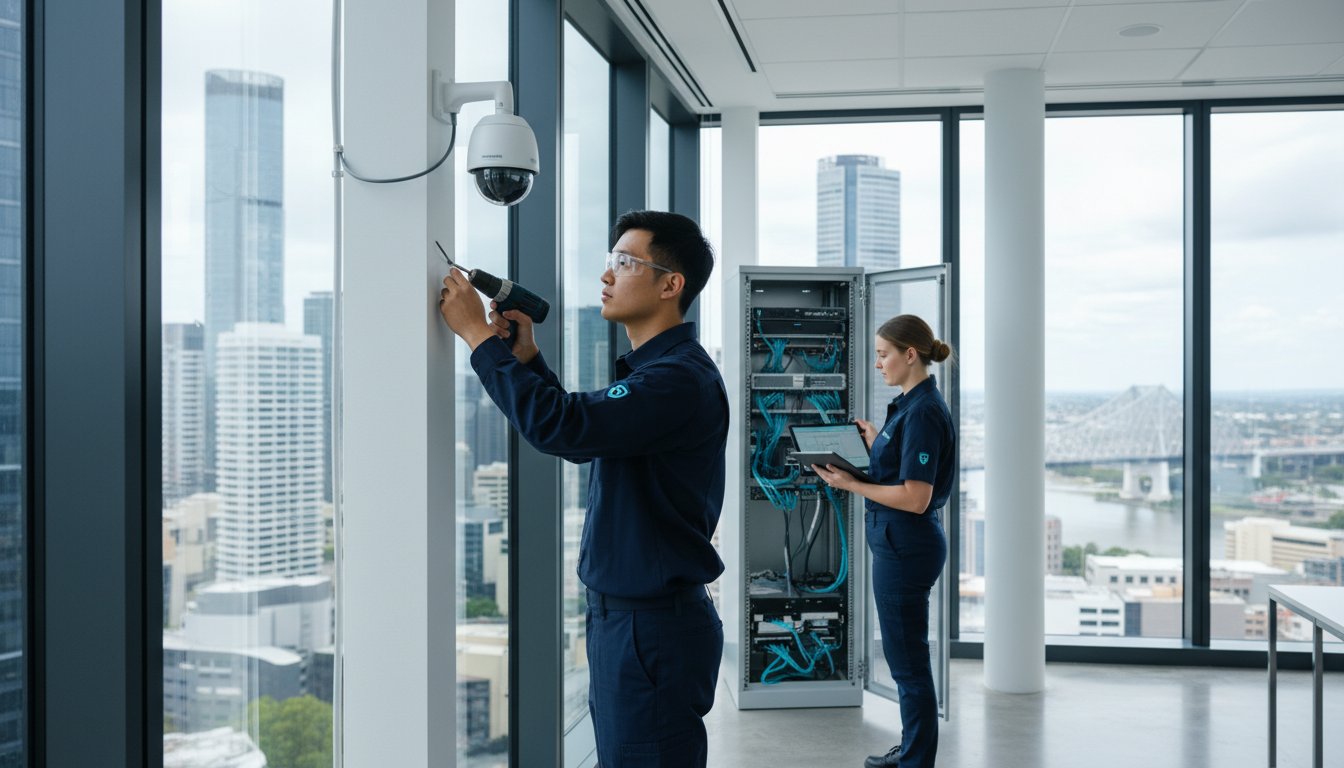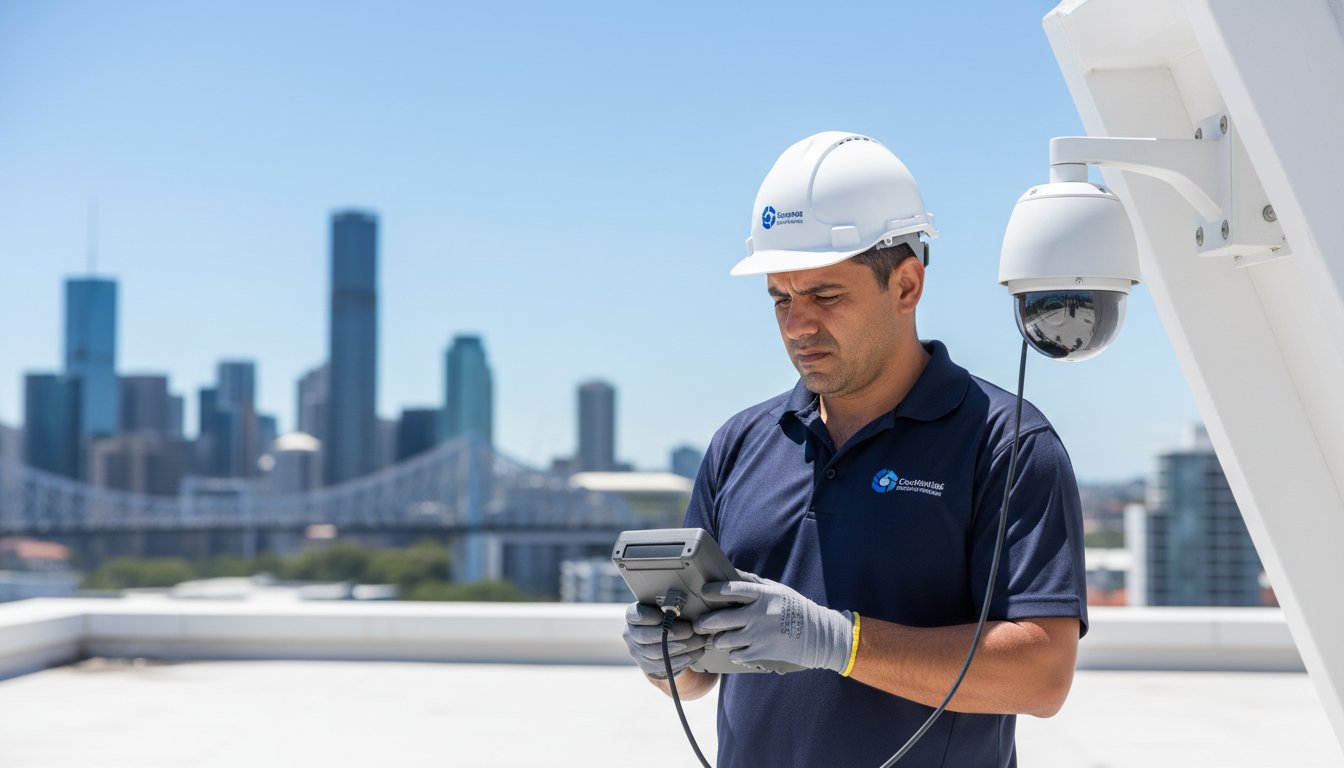
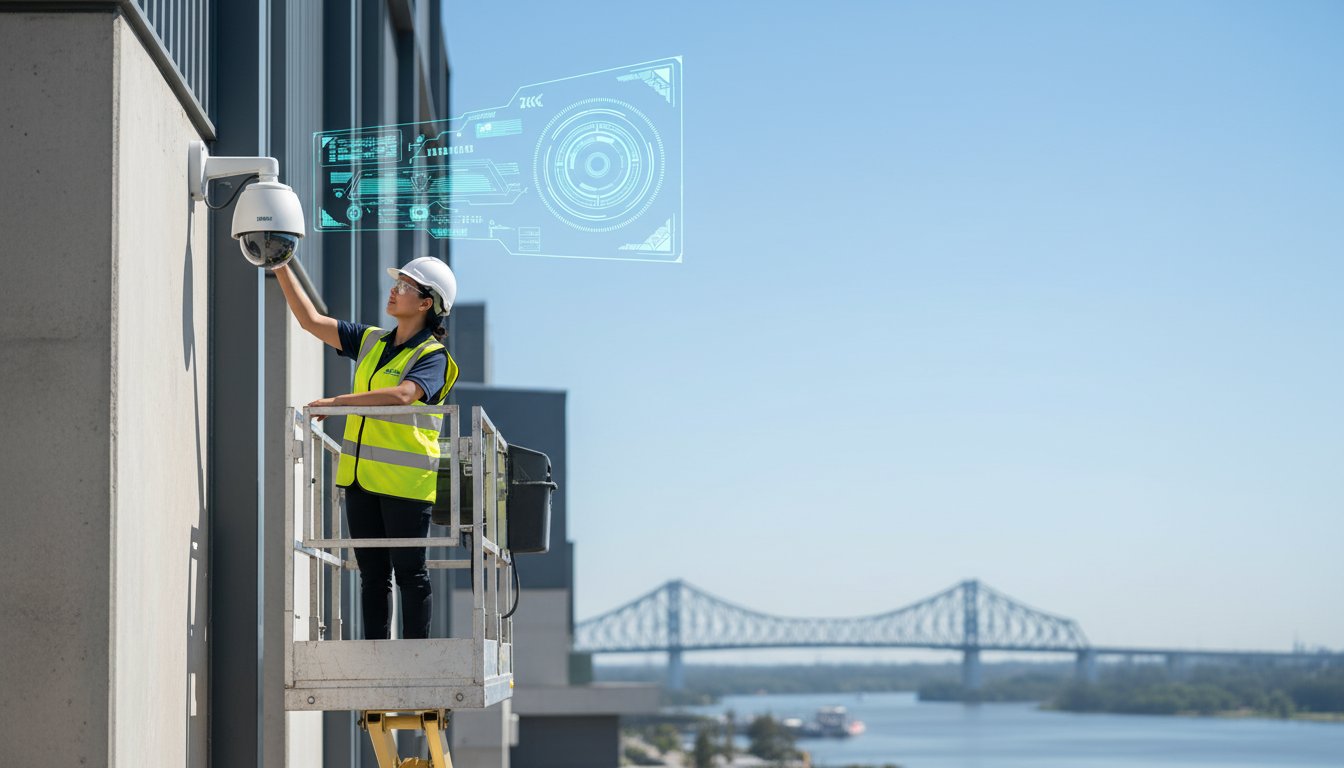
That A$600 “smart” camera kit from a big-box retailer might be the most expensive mistake your Brisbane firm makes this year. You’ve likely felt the frustration of grainy footage that fails to identify a trespasser or the sting of a A$250 fine for a false alarm triggered by a stray cat. In industrial hubs like Eagle Farm and Coopers Plains, where property crime rates shifted by 14 percent in the last 12 months, relying on consumer-grade gear isn’t just risky; it’s a liability. We’ve analyzed the 2026 landscape for business security solutions to help you distinguish between high-tech gimmicks and the robust frameworks needed for genuine asset protection.
We understand that your equipment and inventory aren’t just line items. They’re the lifeblood of your operations. This guide compares the latest professional technologies to ensure your site stays secure and compliant with Australian standards. We’ll show you how to build a layered defense that reduces insurance premiums, prevents loss, and keeps your project on track without the headache of system downtime. By the end of this comparison, you’ll have a clear roadmap for securing your assets with “boots on the ground” reliability.
Key Takeaways
- Learn how to transition from reactive measures to proactive, AI-driven strategies to safeguard your South East Queensland operations against modern threats.
- Compare the four pillars of professional business security solutions to build a fail-safe perimeter that integrates CCTV, alarms, and access control.
- Identify the specific security hardware required for your industry, ensuring your tech matches the traffic and risk profile of your Brisbane location.
- Evaluate the true cost of DIY hardware versus professional-grade systems designed to meet Australian IP ratings and local weather demands.
- Verify compliance with the QLD Security Providers Act to ensure your security partner delivers the integrity and long-term reliability your assets deserve.
The State of Brisbane Business Security in 2026: Reactive vs. Proactive Solutions
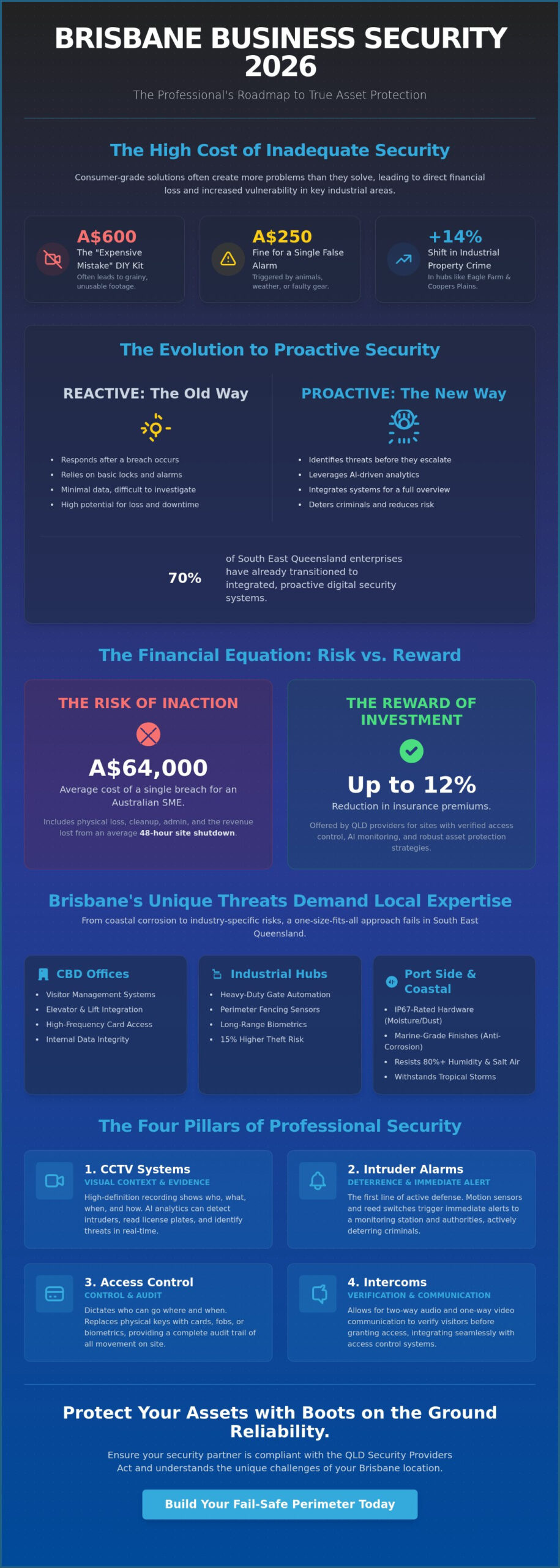
Brisbane’s commercial landscape has undergone a significant transformation. By 2026, the reliance on manual deadlocks and basic padlocks has dropped as 70% of South East Queensland enterprises transitioned to integrated digital systems. The “Old Way” of securing a site relied on reactive measures. You only realized there was a problem after a lock was picked or a window was smashed. This approach is no longer sufficient for modern operations. The “New Way” leverages AI-driven technology to identify threats before they escalate into breaches.
In industrial hubs like Eagle Farm and Acacia Ridge, high-value plant equipment and inventory face unique pressures. These areas often see a 15% higher rate of opportunistic theft compared to suburban retail zones. Implementing robust business security solutions is no longer an optional upgrade; it’s a core requirement for operational survival. These solutions represent a layered asset protection strategy that integrates technology with fundamental physical security principles to deter, detect, and delay unauthorized access.
Understanding the ROI of Proactive Security
Modern security systems are financial tools that actively preserve your bottom line. Insurance providers across Queensland now offer premium reductions of up to 12% for sites that utilize verified access control and real-time AI monitoring. The cost of a breach is rarely limited to the price of stolen tools. A single security incident costs the average Australian SME approximately A$64,000 when accounting for physical loss, forensic cleaning, and administrative recovery. Asset protection is the preservation of both physical goods and operational continuity. If a break-in forces a 48-hour site shutdown, the lost revenue from interrupted projects often exceeds the value of the stolen physical assets.
Local Risks: From CBD Offices to Port of Brisbane Warehousing
Security priorities in Brisbane are dictated by geography. While CBD offices focus on internal data integrity and tailgating at elevator banks, the Port of Brisbane requires hardware that can withstand the harsh coastal environment. Queensland’s climate is a major factor in hardware longevity. High humidity levels, often exceeding 80% in summer, and intense tropical storms can corrode standard electronic components within 24 months.
- CBD Priorities: Visitor management, lift integration, and high-frequency card access.
- Industrial Hubs: Heavy-duty gate automation, perimeter fencing sensors, and long-range biometrics.
- Port Side: Marine-grade finishes and IP67-rated hardware to resist salt air and moisture.
Local “boots on the ground” knowledge is vital for South East Queensland businesses. A national call centre based in another state cannot understand the specific logistical challenges of a storm surge in Hemmant or a power outage in Pinkenba. Partnering with experts who understand the local terrain ensures that your system remains functional when the weather turns, providing a level of reliability that generic, off-the-shelf business security solutions simply cannot match.
Comparing the Four Pillars of Professional Security Solutions
Effective business security solutions don’t rely on a single piece of hardware. They function as a coordinated ecosystem where four distinct pillars work in tandem to protect your physical and digital assets. CCTV, intruder alarms, access control, and intercoms each serve a specific purpose. When you integrate these systems into a single manageable platform, you eliminate the blind spots that criminals often exploit. Selecting the right business security solutions requires understanding how these technologies communicate to create a fail-safe perimeter.
CCTV vs. Intruder Alarms: Detection vs. Deterrence
Alarms act as your first line of active defense. They use motion sensors and reed switches to trigger immediate alerts, providing deterrence at its most basic level. CCTV offers the visual context that alarms lack. While an alarm tells you something happened at 2:00 AM, high-definition recording shows you exactly who was there and how they gained entry. For companies looking at CCTV Installation Brisbane, the goal is 24/7 visibility that supports real-time alarm notifications. In Queensland, the police require clear, timestamped footage to identify suspects and process insurance claims effectively. Low-quality video often leads to dropped charges, making high-resolution hardware a necessity rather than a luxury.
Access Control vs. Intercoms: Managing the Perimeter
Managing staff movement requires a different approach than handling external visitors. Access control systems utilize swipe cards, biometrics, or mobile-based entry to streamline movement for your team. Intercoms bridge the gap for visitor verification. In a corporate environment, you can’t leave the front door open to everyone. A Professional Intercom Installation Brisbane allows your reception or security team to visually confirm a visitor’s identity before granting access. This dual-layer approach ensures that while your 50 employees move freely, every courier or contractor is vetted before they cross the threshold.
Modern security platforms now link these physical measures with digital safety protocols. As these systems move to IP-based networks, aligning your hardware with the Essential Eight cybersecurity framework ensures your security data remains protected from external hacks. This level of technical compliance is vital for the mining and construction sectors where operational uptime is non-negotiable. If you’re ready to harden your site, consulting with a security specialist can help you identify the specific gaps in your current perimeter.
Industry Comparison: Tailoring Solutions to Your Brisbane Business Type
A retail shop in Fortitude Valley manages a high-traffic environment where the primary goal is protecting staff and inventory without slowing down the customer experience. This contrasts sharply with a Pinkenba warehouse where heavy machinery and high-value assets require rugged, long-range protection. Effective business security solutions must account for these operational differences. While the Valley shop might prioritize discreet card readers for back-of-house areas, the Pinkenba site often requires integrated thermal imaging and perimeter alarms to secure its yard.
Many owners believe their operation is too small for professional systems. However, data from the 2023 Queensland Police Service annual statistical review highlights that commercial break-ins can cost small enterprises upwards of A$10,000 in physical losses and downtime. Professional security isn’t a luxury. It’s a foundational part of protecting your assets and ensuring business continuity. Tailoring the tech to your specific risk profile ensures you don’t overspend on unnecessary features while closing the gaps that matter most.
Industrial, Mining, and Construction Security
Mobilization for Brisbane construction projects or Bowen Basin mining sites requires strict adherence to safety-first protocols. These environments utilize thermal imaging to detect unauthorized movement in low-visibility conditions. Long-range surveillance covers large-scale yards where A$250,000 excavators are parked. Access control here isn’t just about theft; it’s about safety compliance. Systems ensure only inducted personnel enter high-risk zones. This reduces liability and meets mandatory workplace health and safety (WHS) standards for industrial mobilization.
- Thermal imaging for 24/7 site perimeter monitoring.
- Restricted access to heavy machinery zones via ruggedized keypads.
- Remote site monitoring for projects outside the Brisbane metropolitan area.
Corporate Offices and Retail Environments
Modern business security solutions for Brisbane offices prioritize personnel safety and internal access management. We implement discreet systems that blend into the architecture, ensuring a professional atmosphere. Managing multiple sites, such as several retail branches across South East Queensland, becomes efficient through centralized cloud-based systems. This allows managers to update access permissions for hundreds of staff instantly from a single dashboard. You maintain security integrity without the need for on-site technicians at every location.
- Discreet biometric or card access for corporate foyers.
- Cloud-based management for multi-site retail operations.
- Time-stamped access logs to monitor staff movement and delivery times.
Professional-Grade vs. DIY Hardware: A Cost and Capability Comparison
Choosing between a retail-grade kit and business security solutions designed for the industrial sector often comes down to the total cost of ownership. While a A$400 Ring or Arlo setup might suffice for a residential driveway, these consumer systems carry hidden costs for commercial operators. Frequent battery replacements, cloud subscription fees that increase annually, and the lack of integration with fire systems create a fragmented security posture. In the high-stakes environments of Brisbane and regional Queensland, hardware must withstand more than just heavy use.
Durability is non-negotiable. Commercial-grade access control systems Brisbane businesses rely on typically carry an IP66 or IP67 rating, ensuring protection against Brisbane’s intense humidity and 100km/h storm winds. Consumer electronics often fail under these conditions within 18 months. Professional systems utilize hardwired connections and heavy-duty alloys, whereas DIY units rely on plastic housings and unstable Wi-Fi signals. Compliance with Australian Standards (AS/NZS 2201) is another critical factor. Professional installation ensures your system meets these legal benchmarks, providing a level of rigour that off-the-shelf products simply cannot match.
Reliability and System Longevity
Commercial hardware lifecycles are built for a 10 to 15 year window, contrasting sharply with the 3 year average for consumer tech. For business-critical sites, ‘Back-to-Base’ monitoring provides a redundant layer of protection that operates even if local power or internet fails. It’s a harsh reality that installing a ‘DIY’ security system often voids commercial insurance policies because the hardware lacks the necessary certifications for high-risk environments. Relying on a retail camera to protect a multi-million dollar asset is a gamble most Queensland project managers won’t take. Facility managers seeking a comprehensive overview of compliant, weather-resistant options should review the security systems Brisbane professional guide to understand how integrated ecosystems outperform standalone consumer devices.
Technical Support and Mobilization
When a gate fails or a keypad loses power, remote troubleshooting is only half the battle for physical security. You need a local Brisbane technician who can get to the site with the right tools immediately. Asset Resources Group handles rapid mobilization for QLD projects, ensuring that technical expertise is deployed to site within 24 hours for critical failures. Asset Resources Group provides business security solutions that prioritize long-term asset protection over short-term savings. Our approach bridges the gap between sophisticated technology and the “boots on the ground” reality of industrial operations.
Ready to secure your site with equipment built for the Australian climate? Partner with Asset Resources Group for compliant, professional-grade security.
Selecting a Security Partner in Brisbane: Compliance and Integrity
Choosing a provider for business security solutions in South East Queensland requires a focus on legal compliance and proven field experience. Under the Security Providers Act 1993, any firm operating in Brisbane must hold a valid security firm license. You should always verify that individual technicians possess the correct Class 1 or Class 2 licenses before they touch your infrastructure. This isn’t just a box-ticking exercise; it’s a legal safeguard that ensures your insurance remains valid and your site stays protected by vetted professionals. Unlicensed work can lead to significant liability issues if a breach occurs on your premises. Businesses that want to understand the full scope of what licensed professionals must deliver can explore the 2026 professional guide to security systems Brisbane specialists recommend for compliant asset protection.
Many businesses make the mistake of treating security as a one-off transaction. A transactional provider installs a reader, collects a fee, and leaves. A true partner understands the specific pressures of the South East Queensland resource and construction sectors. They look at how your access control system integrates with your mobilization efforts and workforce management. They don’t just sell hardware; they provide a framework for long-term operational integrity. For firms in the real estate, legal, and accounting sectors, this integrity also extends to meeting regulatory obligations; you can visit AML Partners to learn more about specialized compliance advisory. For tech-focused organizations managing high-value intellectual property, you can visit Dreamoro Group to learn more about their healthtech venture studio and investment model. This partnership model ensures that as your business scales, your security infrastructure evolves alongside it.
The Asset Resources Group Approach
We treat your people and property as our most valuable assets. Our “Safety-First” culture means we never cut corners on hardware or installation standards. We prioritize high-quality components that withstand the harsh Australian climate, ensuring your business security solutions don’t fail during a heatwave or storm. Our team brings a “boots on the ground” pragmatism to every project, moving swiftly from site audit to mobilization. We bridge the gap between corporate requirements and site-level reality. To understand how we compare to others in the region, explore our insights on the Best Security Firms in Brisbane.
Your 2026 Security Roadmap
Securing your premises for the coming years requires a proactive strategy rather than a reactive fix. Start by reviewing your current vulnerabilities through a professional risk assessment. This process identifies gaps in your perimeter and internal access points that outdated systems might miss. Follow these steps to modernize your Brisbane site:
- System Audit: Evaluate your current hardware and software compatibility with modern encrypted credentials.
- Tailored Assessment: Request a risk profile based on your specific industry, whether it’s mining, civil, or corporate.
- Scalable Design: Develop an access control plan that grows with your workforce and site footprint.
- Professional Installation: Ensure mobilization is handled by licensed experts who understand local QLD regulations.
Don’t leave your site’s integrity to chance. A secure environment is the foundation of a productive workforce. Contact Asset Resources Group for a custom security solution today to book your comprehensive site assessment and take the first step toward a more secure future.
Future-Proofing Your Brisbane Operations
The security landscape for 2026 demands a decisive shift from reactive monitoring to proactive asset protection. Brisbane business owners can’t afford the downtime or liability associated with sub-par DIY hardware that lacks professional certification. Selecting high-grade business security solutions ensures your site meets the rigorous demands of the Queensland industrial sector. Professional systems provide the reliability needed for high-risk corporate and mining environments where equipment failure is a significant operational risk. It’s about more than just cameras; it’s about partnering with experts who prioritize legislative compliance. Asset Resources Group is a 100% Australian-owned and operated firm specializing in high-risk industrial and corporate security. We’re fully licensed under the QLD Security Providers Act, ensuring every deployment meets strict legal and safety standards. Our team brings a “boots on the ground” pragmatism to every project, focusing on tailored strategies that protect your most valuable human and physical capital. By prioritizing integrity and quality, you’ll protect the long-term value of your enterprise. Secure your Brisbane assets with a professional security solution today. We’re ready to help you build a safer, more resilient business.
Frequently Asked Questions
What are the most essential business security solutions for a new Brisbane office?
New Brisbane offices require a combination of electronic access control, high-definition CCTV, and back-to-base alarm monitoring. These business security solutions ensure that only authorized personnel enter your facility while providing a clear audit trail. According to the Queensland Police Service 2023 annual statistical review, commercial premises with integrated systems see significantly lower rates of unauthorized entry. We recommend starting with an IP-based intercom and a minimum of four 4K cameras for perimeter coverage.
How much does a professional commercial security system cost to install in Brisbane?
Commercial security installation costs in Brisbane typically range from A$2,500 for small retail spaces to over A$15,000 for multi-level industrial sites. Industry data from 2024 indicates that a standard four-camera CCTV system with a network video recorder starts at approximately A$1,800. Access control for a single door using a keypad or card reader usually adds A$1,200 to A$2,000 depending on the cabling requirements and hardware quality.
Do I need a specific license to install security cameras in my Queensland business?
You must ensure your installer holds a current Security Provider License from the Queensland Office of Fair Trading. Under the Security Providers Act 1993, anyone who installs, maintains, or repairs security equipment for a fee must be licensed. Businesses should check the public register to confirm their contractor holds a Class 2 license. It’s also vital to comply with the Surveillance Devices Act 2004 regarding privacy and signage in the workplace.
Can I integrate my existing alarm system with new CCTV cameras?
You can integrate most legacy alarm systems with modern CCTV cameras through hardwired inputs or software bridges. This setup allows your cameras to start recording at high bitrates or send push notifications when a PIR sensor triggers an alarm. Most commercial systems installed after 2018 support standard ONVIF protocols, making it easier to link different brands. This creates a unified response that improves your overall business security solutions.
What is the difference between active deterrence and passive surveillance?
Active deterrence systems use strobe lights and sirens to stop an intruder before they enter, while passive surveillance only records the event for later review. Modern active systems use AI to detect humans or vehicles with 98 percent accuracy, triggering a localized alarm to scare off trespassers. Passive systems are better for internal monitoring and historical evidence. Choosing the right one depends on whether you’re protecting high-value stock or just monitoring staff movements.
How does Brisbane’s weather affect the choice of outdoor security hardware?
Brisbane’s high humidity and intense UV levels mean you must select hardware with an IP67 weather rating and IK10 impact protection. Standard plastic housings often degrade within 24 months under the Queensland sun, so we use powder-coated aluminum or marine-grade stainless steel for outdoor mounts. During the November to March storm season, surge protection is a mandatory requirement to prevent lightning strikes from frying your entire security network.
Is cloud-based access control more secure than traditional swipe cards?
Cloud-based access control is generally more secure than traditional 125kHz swipe cards because it uses AES-256 encryption and eliminates physical card cloning. Traditional cards are easily duplicated with A$20 devices bought online, whereas mobile credentials require biometric phone unlocking. Cloud systems also allow 24/7 remote management from any Brisbane office, letting managers revoke access instantly if a staff member loses their device or leaves the company.
How often should a commercial security system be serviced in South East Queensland?
Commercial security systems in South East Queensland should undergo professional servicing at least every 12 months to comply with Australian Standard AS 1851. For high-risk environments like warehouses or 24 hour gyms, we recommend a six-month maintenance cycle. Regular checks ensure that backup batteries are holding charge and that camera lenses haven’t been obscured by spider webs or dust, which is a common issue in Queensland’s subtropical climate.